The best flea treatment is not a universal brand or format. It is the veterinarian-approved plan that matches your dog’s species, age, weight, health history, location, exposure, and household. Flea control and tick control overlap, but they are not identical problems; confirm exactly which parasites a product covers and how often it must be used.
If your dog is already itching, has visible fleas or flea dirt, or has an attached tick, prevention alone may not answer the immediate problem. Contact your veterinary clinic for a treatment plan, especially for puppies, pregnant or nursing dogs, dogs with previous reactions, neurologic conditions, significant skin disease, or other medications.
Before choosing · checklist
Questions that narrow the options
- Which fleas and ticks are common where you live and travel?
- Does your dog swim or get bathed frequently?
- Can everyone in the household reliably follow the dosing schedule?
- Are there cats, young children, or other pets that could contact a topical product?
- Has your dog reacted to a preventive or experienced seizures or other neurologic signs?
- Do you need flea control, tick control, or both?
How common formats differ
Oral preventives avoid residue on the coat and cannot wash off, but they still require correct weight-based dosing and a reliable schedule. Product classes and medical cautions differ, so this is a veterinary decision rather than a generic “chew versus collar” vote.
Topical treatments are applied to the skin. Application site, drying time, bathing, contact with people or other animals, and species-specific warnings all matter. Never substitute a product labeled for another species or weight range.
Collars vary in active ingredients, coverage, fit, and duration. A collar must be worn and maintained exactly as directed, checked for skin irritation, and kept away from animals or children the label warns about.
Shampoos, sprays, powders, and household products may have a role in an active infestation, but they do not automatically replace ongoing prevention. Combining products without veterinary guidance can expose a dog to overlapping ingredients.
If you find fleas
Fleas do not stay only on the dog. Ask your veterinarian how to treat every pet in the household safely and on the same timeline. Wash bedding as directed, vacuum areas where pets rest, empty the vacuum appropriately, and follow product labels for any home treatment. Improvement may take time because immature flea stages in the environment can continue to emerge.
Seek veterinary advice promptly if the dog is very young, weak, pale-gummed, extensively irritated, losing hair, or developing sores. Intense itching may have causes beyond fleas, and some dogs react strongly to flea bites.
If you find a tick
Remove an attached tick promptly using a method recommended by your veterinarian or public-health authority. Avoid improvised substances or burning the tick. Note the date and likely exposure location, then watch the bite site and your dog’s health. The safe tick-removal guide provides a step-by-step routine and explains when to call the clinic.
Contact your veterinarian if you cannot remove it, mouthparts appear to remain, the site becomes increasingly irritated, or your dog later develops lethargy, reduced appetite, fever, lameness, or other concerning signs.
Use labels as safety instructions
- Confirm species, minimum age, weight range, dose, frequency, and application method every time.
- Do not split doses or combine preventives unless your veterinarian directs you to do so.
- Keep packaging and record the date, product, and dose used.
- Follow bathing, swimming, drying, and contact restrictions.
- Store products away from children and animals, and report suspected adverse reactions to your veterinarian.
Build a repeatable prevention routine
- Put dosing or replacement dates on the household calendar.
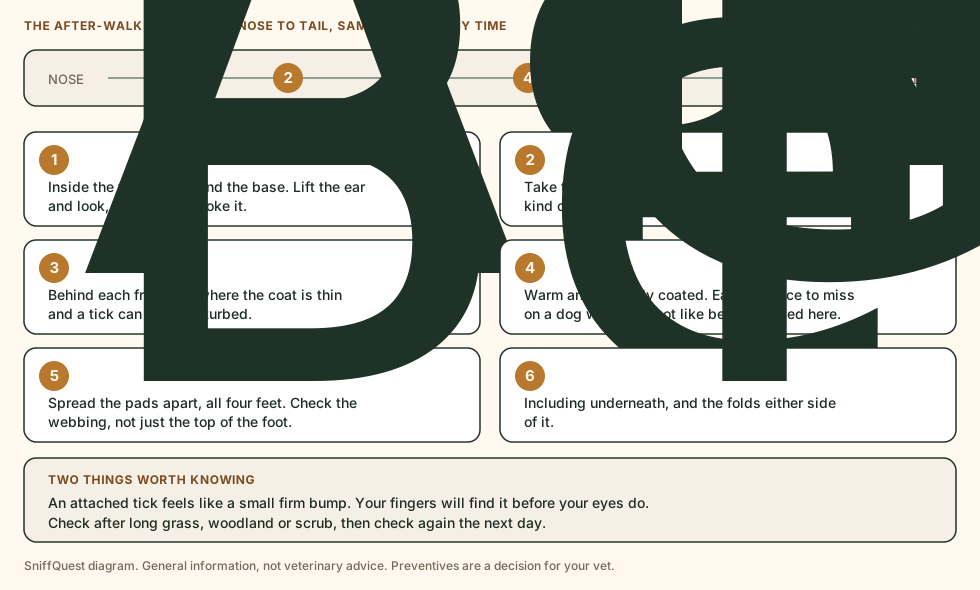
- After exposure, check the dog in good light from ears to tail, including under the collar and between the toes.
- Record ticks, missed doses, skin reactions, and travel to new regions.
- Review the plan when the dog’s weight, health, medication, household, or travel pattern changes.
Related SniffQuest guides
Use the parasite prevention hub for the full after-walk routine and the tick prevention decision guide for regional questions. Cooperative handling makes checks easier; the training treat guide explains how to reward short inspection sessions. For summer trail planning, pair these checks with the hot-weather guide.
Sources and further reading
- U.S. Environmental Protection Agency — controlling fleas and ticks on pets
- U.S. Centers for Disease Control and Prevention — preventing ticks on pets
Disclaimer: This article is general information for dog owners, not veterinary or legal advice. When official notices, recalls, or health symptoms are involved, confirm details with primary sources and consult your veterinarian.