Calm walks · Sniff walks
How to do a sniff walk with your dog
A sniff walk is a slow walk where your dog chooses where to put their nose and your job is to keep them safe. Pick a quiet route, use a comfortable harness and a slack lead, say “go sniff”, and follow at your dog’s pace for fifteen to thirty minutes. Distance does not matter; the sniffing is the point.
See the six steps No special gear needed. Your usual lead works for a first try.
Why sniff walks help
Decompression, not performance
Dogs take in much of their world by smell, and a walk spent hurrying past every lamp post wastes the part they care about most. Letting your dog stop, sniff and choose a direction is mentally tiring in a good way. Blue Cross describes slow, nose-led “sniffari” walks as very mentally stimulating, even though they cover less ground (Blue Cross).
Sniff walks are especially useful for dogs who must stay on the lead, older dogs, and dogs who find busy, fast walks stressful. They do not replace exercise for an energetic young dog; most dogs do best with a mix of both.
Step by step
Your first sniff walk in six steps
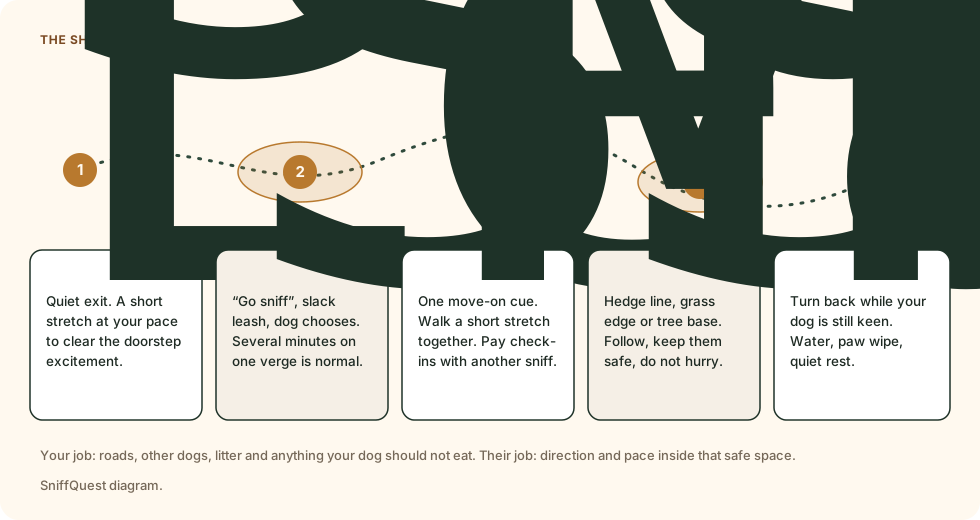
- Choose a quiet route you know. A park edge, a tree-lined street or a field path at a calm time of day. Fewer dogs, bikes and cars mean fewer interruptions.
- Leave calmly. Walk the first minute or two at your pace until the doorstep excitement has passed.
- Say “go sniff” and give slack. Let the lead hang in a soft curve and let your dog choose where to put their nose. Several minutes on one patch of grass is normal.
- Follow, and watch for hazards. You decide what is safe: roads, other dogs, litter and anything your dog should not eat. Inside that space, your dog chooses direction and pace.
- Move on kindly. When you need to go, say a move-on cue such as “this way”, wait a moment, then walk on. Reward a check-in with the chance to sniff the next good spot.
- Head home early. Turn back while your dog is still keen. At home: water, a paw wipe, and a quiet rest.
The shape of a sniff walk
Lead handling
Keep the lead soft
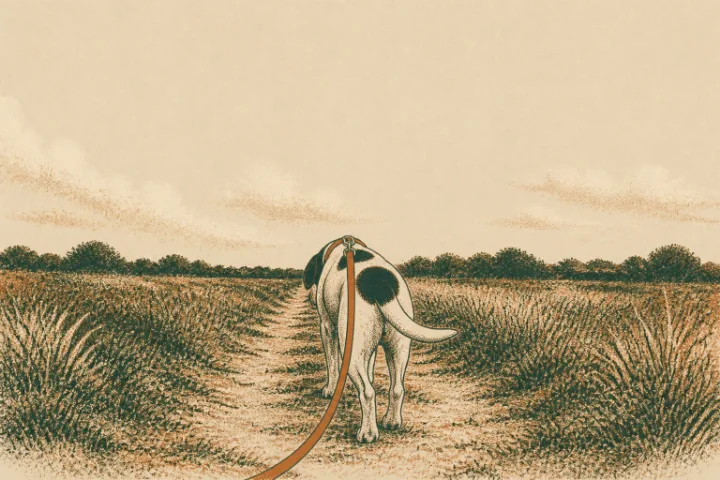
- Clip the lead to the back or chest ring of a harness, not a collar, so a sudden stop does not jolt the neck.
- Hold the handle in one hand and let out or gather lead with the other. A soft curve, or J shape, means neither of you is pulling.
- To slow down, stop walking and let the lead come gently taut. Do not jerk it.
- On a long line, keep the spare line off the ground where it can wrap round legs, and shorten up near paths, roads and other people.
- Follow local lead rules. A longer line is for quiet, open spaces, not pavements beside traffic.
Reading your dog
Nose down, nose up, and when to move on
Nose down: slow, steady sniffing along a verge or tree base. This is the walk working. Wait.
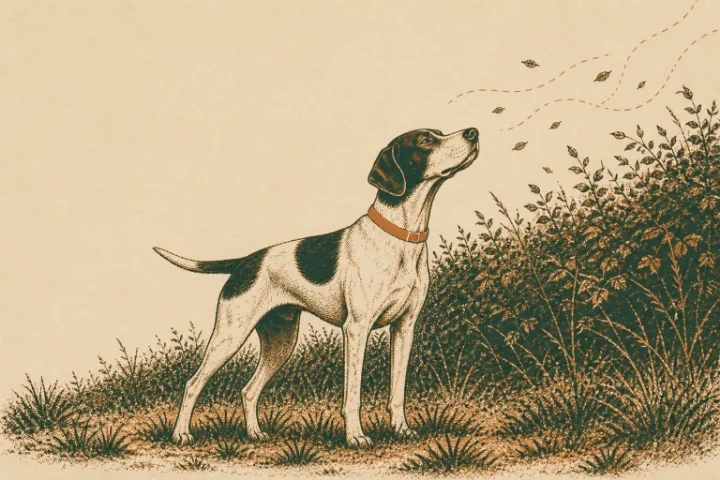
Nose up: head lifted, nostrils twitching, sampling the breeze. Your dog is reading air scent, often from something further away. Give them a moment before moving on.
Time to move on: your dog is mouthing or eating something, getting ready to roll, or freezing and staring at another dog. Calmly call them away and walk on.
Making it richer
Sniff walk ideas when the basics feel easy
- Let your dog choose the route at each junction, within safe limits.
- Scatter Find It in a grass verge. The same cue from your indoor Find It game works outside.
- Lay a short treat trail across a patch of grass, as in the indoor treat trail.
- Try a new place. A short drive to a quiet field or woodland edge gives your dog a whole new set of smells.
- Walk the same loop after rain. Damp ground often holds scent well, and many dogs slow down; see the field note on why damp ground slows a walk.
Adapting the walk
City streets, nervous dogs and older legs
- City or small spaces: one tree-lined block, the edge of a car park verge or the base of a building’s planters can fill fifteen minutes. Go at quieter times.
- Nervous or reactive dogs: choose empty places and times, keep plenty of distance from triggers, and turn away early rather than pushing past. A qualified behaviour professional can help if walks are often hard.
- Older dogs or limited mobility: sniff walks suit them well. Pick flat, soft ground, keep the distance short and let the sniffing do the work.
- Puppies: follow your vet’s advice on where they can go before vaccinations are complete. Keep outings short.
- Flat-faced breeds and warm days: go early or late, stay in shade, and keep it short.
Safety
What to check before and after
- Things your dog should not eat: discarded food, bones, mushrooms, rodent bait and dropped medication. If you think your dog has eaten something toxic, call your vet or the ASPCA Animal Poison Control Center.
- Heat: test pavement with the back of your hand and walk in the cooler hours. Read the hot pavement and heat stress guide.
- Smoke and poor air: on high-pollution or wildfire-smoke days, shorten the walk and move sniffing indoors. See the guide to walking dogs when air quality is poor.
- Ticks: after long grass or woodland, run your hands over your dog nose to tail. The safe tick removal guide covers what to do if you find one.
- Water: keep dogs out of still, discoloured or scummy water; read the blue-green algae guide.
- Other dogs and people: not every dog wants to be sniffed. Shorten the lead and give space.
Common mistakes
What beginners often get wrong
- Judging the walk by distance instead of how settled your dog is afterwards.
- Buying a long line before practising slack on the lead you already own.
- Hurrying your dog away from every sniff. A check-in can earn another sniff instead of ending the fun.
- Choosing a busy route at a busy time, then wondering why your dog cannot settle.
- Staying out until your dog is flagging. Head home while the walk still feels good.
Field guides
Reads when you want more depth
Practical articles—retailer examples sit low on each page.
Sources
Sources and further reading
- Blue Cross: Keeping walks on a lead fun for your dog (sniff walks and the “go sniff” cue).
- American Kennel Club: Benefits of sniff walks for dogs and how to do them.
- VCA Animal Hospitals: Mental stimulation for dogs: sniffing walks.
- Dogs Trust: Enrichment activities for dogs.
- ASPCA: Animal Poison Control.
Optional gear later
Nothing required to start.
A long line belongs in the picture when slack sniffing is what is stuck—not before your first slow loop. Deeper field guides sit below when you want them.
Affiliate disclosure (standard SniffQuest copy): SniffQuest currently has no active Amazon Associates affiliate links. For flea, tick, parasite-control, medication, or health-related decisions, talk to your veterinarian first.