Environmental hazard · Safety Desk
Blue-green algae at dog swim spots
Stagnant water first—not panic headlines.
Warm, still water with surface scum can carry toxins that harm dogs quickly. The useful habit is boring: read local advisories, scan the shoreline before your dog wades in, and skip fetching when the water looks wrong.
Review practical steps Parent hub: Safety Desk—seasonal hazards and official notices live there first.Editorial standards
What this page is, and is not
This page is about recognising risky water and deciding not to let your dog in. It is not a diagnosis and not a treatment guide. Suspected exposure is an emergency call, not a reading task.
Last reviewed: 2026-05-21
Quick answer
Start here if you are in a hurry
If water looks stagnant, thick, or has paint-like scum on the surface, keep your dog out. After suspected contact, rinse coat and paws with clean water and contact your veterinarian—especially if vomiting, tremors, or weakness appear.
Practical guidance
Calm steps for this week
Repeatable habits beat one perfect outing—note what you observed for next time.
- Check local lake, pond, and beach advisories before you drive out—official postings beat social photos.
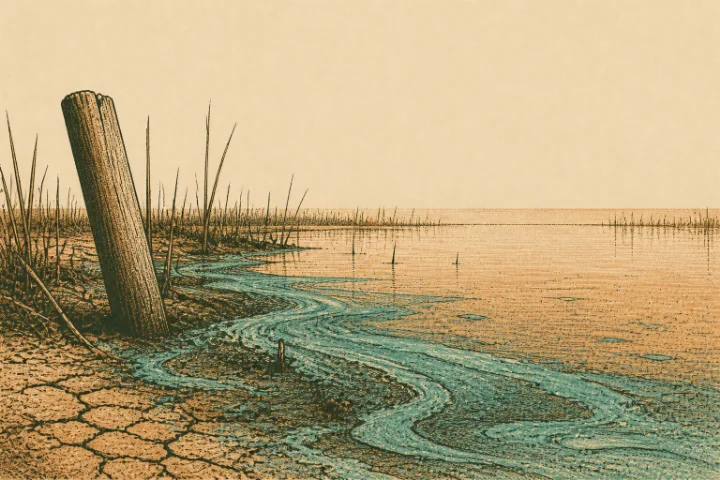
- Scan the shoreline: greenish film, pea-soup color, or streaks along the edge are reasons to stay on dry ground.
- Skip fetch and wading in warm, still water after long hot spells—even clear-looking ponds can bloom.
- Rinse paws and coat with clean tap water after any splash in questionable water before your dog grooms.
- Note the location and date if your dog entered water you later doubt—your vet may need context.
When to stop outdoor activity
End the loop early
Shortening the outing is success—not failure—when conditions shift.
- Surface scum, strong odor, or dead fish near the water's edge—leave the area; do not let your dog drink or roll.
- Your dog already waded in and the water now looks suspect—end the outing and rinse on the way home.
- Local authorities posted a bloom advisory for that body of water—treat it as closed for swimming and fetch.
- You cannot see the bottom and the water is stagnant and warm—choose a dry loop instead.
When to contact your veterinarian
Escalation—not online guessing
This page is general guidance. Your veterinarian or an emergency clinic handles illness signs and exposure follow-up.
- Vomiting, diarrhea, drooling, weakness, tremors, or seizures after water contact—urgent veterinary care.
- Your dog drank from or licked scummy water and seems unwell within hours—call your vet or an emergency clinic.
- You are unsure whether exposure happened but symptoms are progressing—do not wait on online guesses.
- This page is general guidance—not a toxin test. Your veterinarian interprets signs and next steps.
Common mix-ups
What owners often get wrong
- Letting fetch continue because the water looked fine last month—blooms can appear fast in warm weather.
- Assuming salt water or moving rivers are automatically safe—check local guidance; scum can collect in eddies.
- Rinsing once at home but skipping the vet call when mild vomiting starts.
- Treating social media photos as proof a beach is open—verify official advisories.
Field notes
Recent observations
Short practice notes—season, pace, and when to slow down.
- 2026-05-16 · Why damp ground slows a walk
Related paths
Editorial note: This page carries no retailer links. SniffQuest has not tested any product named here; anything mentioned is described, not recommended.