The short answer: sprinkle a few treats or part of a meal over the mat, put it down, and let your dog search while you stay in the room. Lift it away as soon as the food is gone or your dog starts chewing the fabric. Make it harder only once the easy version is finished calmly. Most dogs get a slower, calmer meal and a few minutes of real nose work out of it.
Snuffle mats suit rainy days, small homes, fast eaters and older dogs who cannot walk far. Dogs Trust lists them among simple ways to let dogs use their nose at home (Dogs Trust). They are a tool, not a requirement: the Find It scatter game teaches the same skill with nothing but a floor.
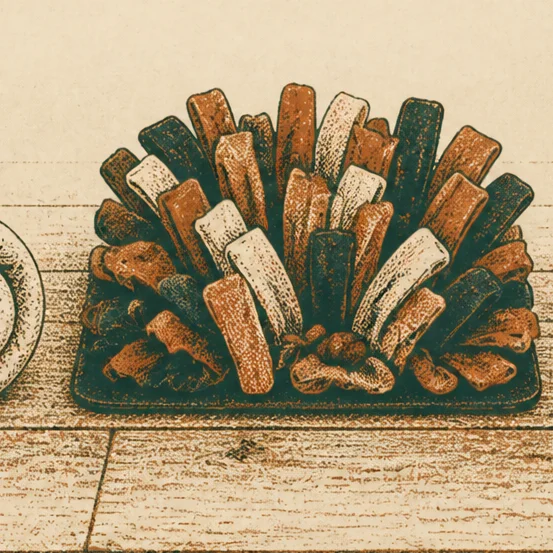
Your first snuffle mat session
- Pick a quiet room and put the mat on a non-slip floor or on top of a rug.
- Sprinkle eight to ten pieces of kibble or small treats across the top of the strips, where your dog can see some of them.
- Put the mat down, say your search cue once (“find it” works), and step back.
- Stay in the room and watch. Do not point to the food or help.
- When your dog stops searching, swap the mat for a treat from your hand and put it away out of reach.
Two or three short sessions a day for a few days is enough for most dogs to learn what the mat means.
How to make it harder, step by step
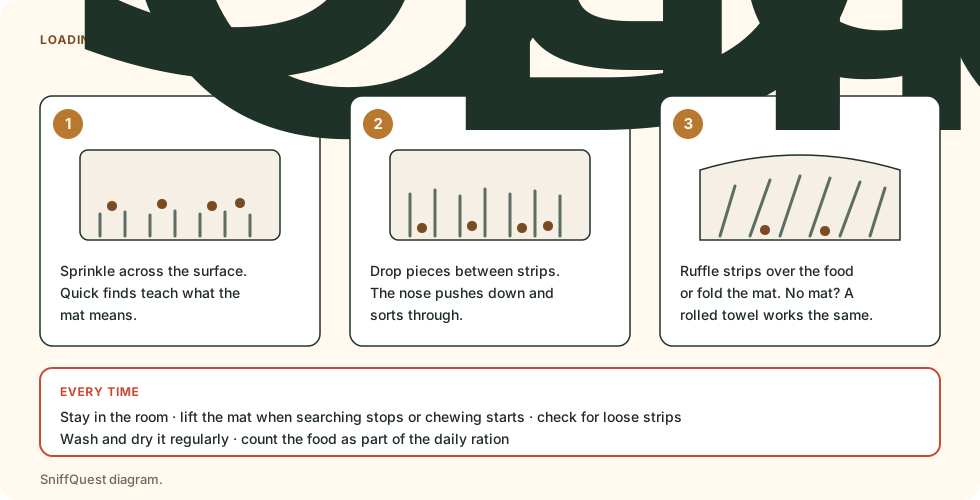
Level one, on top: food sprinkled across the surface. Quick finds teach the game.
Level two, down in the strips: push pieces down between the strips so your dog has to nose through.
Level three, ruffled or folded: ruffle the strips over the food, or fold the mat in half. Once all three are easy, move the mat to a different room or try a box search for variety.
Make it easier if your dog digs frantically, barks at the mat, gives up, or starts pulling strips out. Go back a level and keep sessions shorter.
No mat? Make one in ten minutes
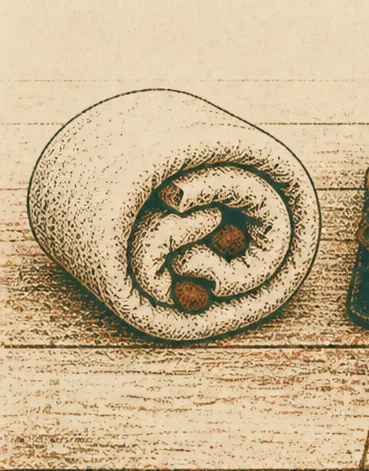
Towel roll (no sewing): lay an old bath towel flat, scatter treats across it, and roll it up loosely from one end. Your dog noses and paws it open. Bunch it loosely for an easier start. Full steps are in the towel roll game.
Rubber-mat version: take a rubber sink or bath mat with holes, cut fleece into strips roughly 2 to 3 cm wide and 15 cm long, and tie each strip through two neighbouring holes with a double knot, close together, until the surface is covered. Fleece does not fray, which matters because loose threads are easy to swallow. Tug every strip before first use.
Homemade mats need the same supervision as bought ones, and they are only as safe as their knots.
How to choose a snuffle mat
SniffQuest has not tested any specific mat, so this is a checklist rather than a ranking:
- Strip length to suit your dog. Long, dense strips are harder; short strips suit beginners, puppies and flat-faced breeds.
- Size. Large enough that your dog can stand and sniff without pushing it across the floor; a large dog needs a bigger mat.
- Non-slip base. A rubber or grippy backing stops the mat sliding, which matters for older dogs.
- Secure strips. Strips should be stitched or tightly knotted. Avoid mats with small plastic parts, bells or loose threads.
- Washable. Check that it can be machine-washed and dried fully, because food dust and saliva build up.
A mat is optional. If you are unsure your dog will enjoy one, try the towel roll first.
Next on the trail
Where to go next
- Try the other indoor scent games for dogs, including the cup game and sniff-and-seek.
- Not sure which to try next? The Scent Game Finder suggests a game for your dog and the time you have.
- Take the same “find it” cue outside on a slow sniff walk.
- Pair a snuffle session with a calm finish using a lick mat.
Sources and further reading
- Dogs Trust: Enrichment activities for dogs.
- Blue Cross: Enrichment for dogs.
- Duranton, C. & Horowitz, A. (2019). Let me sniff! Nosework induces positive judgment bias in pet dogs. Applied Animal Behaviour Science, 211, 61–66.
Disclaimer: This article is general information for dog owners, not veterinary or legal advice. When official notices, recalls, or health symptoms are involved, confirm details with primary sources and consult your veterinarian.